Calls for Proposals
AAP cosmic 2026 (OUVERT)
AAP STANDARD & EXPLORATOIRE
Le PTL COSMIC (Complex Organoid Systems with Multifaceted InteraCtions) du pôle Biologie-Santé est ravi d’annoncer le lancement de son deuxième appel à projets.
Comme pour le premier appel, ce dernier vise à financer des projets audacieux, à risque et de rupture, afin de stimuler l’innovation et l’exploration de nouveaux horizons scientifiques.
Vous trouverez ci-dessous tous les détails de l’appel à projets (AAP) ainsi que les modalités de soumission.
Calendar
● Date limite de réception des projets : 30 octobre 2026, 14h CET
● Annonce des résultats : courant Décembre 2026
● Début du financement : à partir de janvier 2027
AAP COSMIC 2025 (closed)
Standard and Exploratory AAP
TheCOSMIC(Complex Organoid Systems with Multifaceted InteraCtions)PTLin theBiology-Healthcluster launched itsfirst call for projects in 2025.
This callfor proposals aims tofund bold, high-risk, and groundbreaking projects in order to stimulate innovation and the exploration of new scientific frontiers.
TheCOSMIC PTLaims to:
- Developnew, advanced experimental models
- Enhance theanalytical capabilitiesof these systems
- Deepening ourunderstanding of living systems
- Propose models withhigh translational potential
In addition, the PTL is committed tobuilding and strengthening the local scientific communityby supporting collaborative initiatives.
AAP Master's Scholarships
The PTL COSMIC has funded five master’s scholarships as part of the Biology-Health Research Cluster’s “Master’s Scholarships” call for proposals. This funding supports projects related to the PTL COSMIC theme—“Complex Organoid Systems with Multifaceted Interactions”—involving a team from the Biology-Health Research Cluster.
2025 Award Winners – Standard and Exploratory Calls for Proposals
Standard Projects
- John De Vos, IRMB
- Mireia Pelegrin, IRMB
- Delphine Muriaux, IRIM
- Edouard Tuaillon, PCCEI
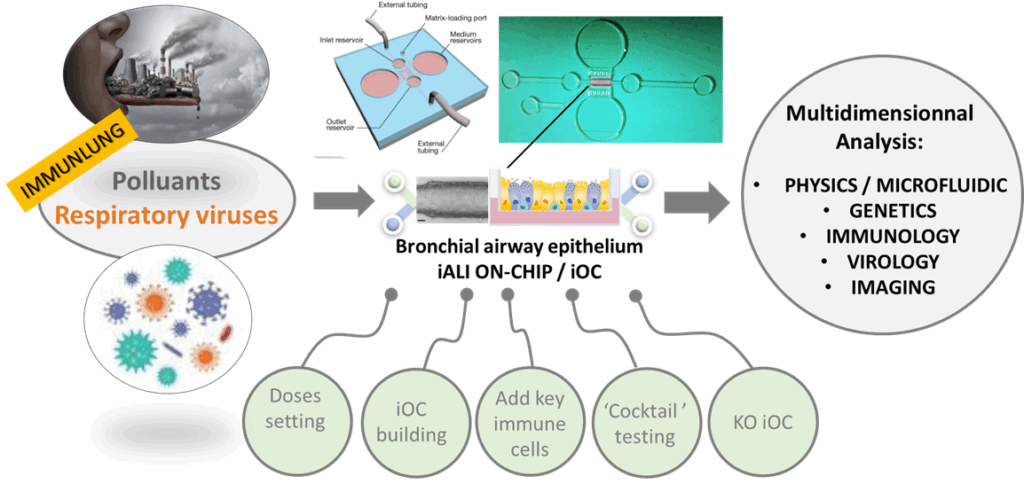
The IMMUNLUNG project aims to develop an advanced model of human bronchial tissue derived from induced pluripotent stem cells (iPSCs) on a chip (Organ-on-Chip) that incorporates immune and endothelial cells. This immunocompetent mini-lung will enable researchers to study the impact of the “cocktail” of air pollutants and respiratory viruses—the aerial exposome—on bronchial epithelial function and inflammation. This platform will provide a powerful tool for research, the screening of small therapeutic molecules, and a pathway toward personalized medicine.
- Jean-Philippe Hugnot, IGF
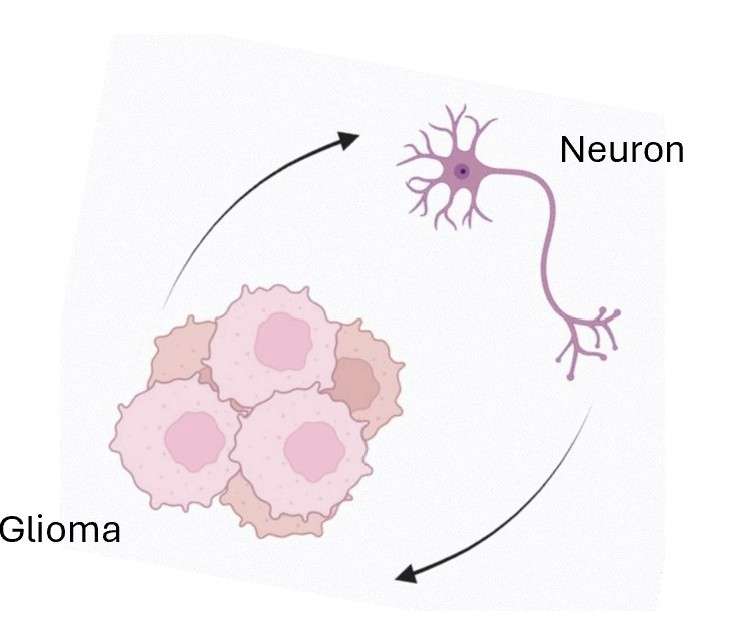
Developing Human Mini-Brain Models to Study Glioma–Neuron Interactions
Our laboratory, composed of clinicians and researchers at the IGF, focuses on brain tumors known as gliomas, which remain incurable. We particularly study IDH1-mutant gliomas, a form that often affects young adults. It is now well established that these tumor cells interact closely with the neurons of the brain.
The goal of our funded project is to develop a model to study glioma–brain interactions using humanmini-brains(tumoroids) derived from induced pluripotent stem cells (iPSCs).
To achieve this, we have collaborated with Synaxys (Toulouse) to develop a 3D model, while also establishing a complementary 2D model in our own laboratory.
exploratory project
- Fabien Blanchet, IRIM
SKINCEPTION
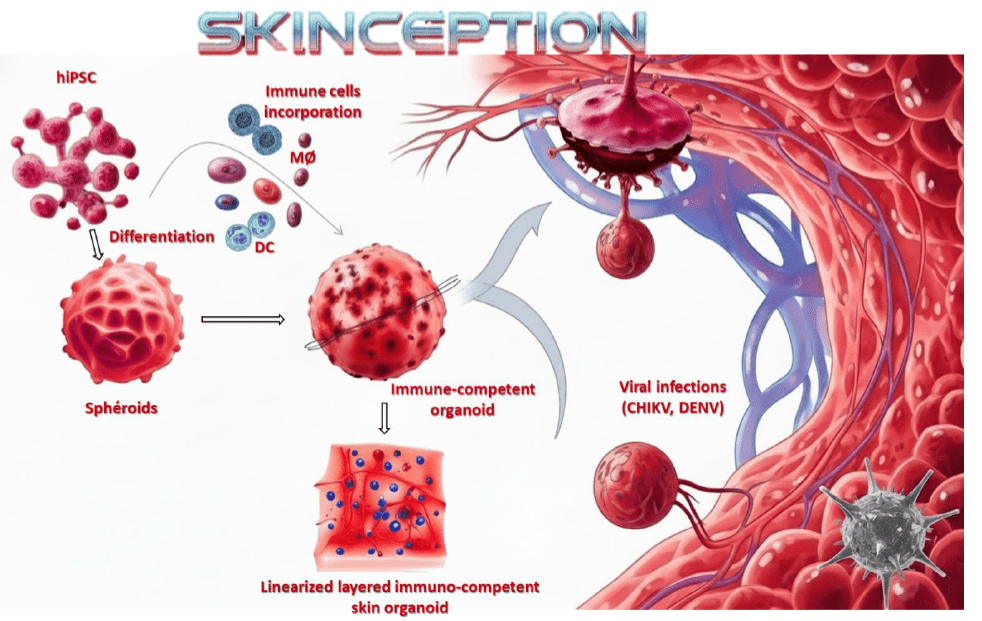
Our “SKINCEPTION” project pioneers the next generation of human skin organoids, redefining how we model and understand human skin biology. Derived from hiPSCs, these self-organizing, in vitro-derived skin organoids authentically recreate the layers, cell diversity, and appendages of real human skin. What truly sets our project apart is the integration of immune cells (macrophages (MØ), dendritic cells (DC), Langerhans cells (LC), and T lymphocytes), creating an immune-competent skin organoid capable of mimicking natural skin–immune interactions. Coupled with cutting-edge single-cell and spatial multi-omics, this system will become a living physiological system for studying viral infections, inflammation, and regeneration directly in a human context. The results of SKINCEPTION will revolutionize our ability to decode host-virus interactions and uncover new immune pathways, while also potentially paving the way for personalized therapies for skin-related viral diseases.
2025 Recipients – Call for Applications: Master’s Scholarships – COSMIC
- Caroline Bonnans, IGF
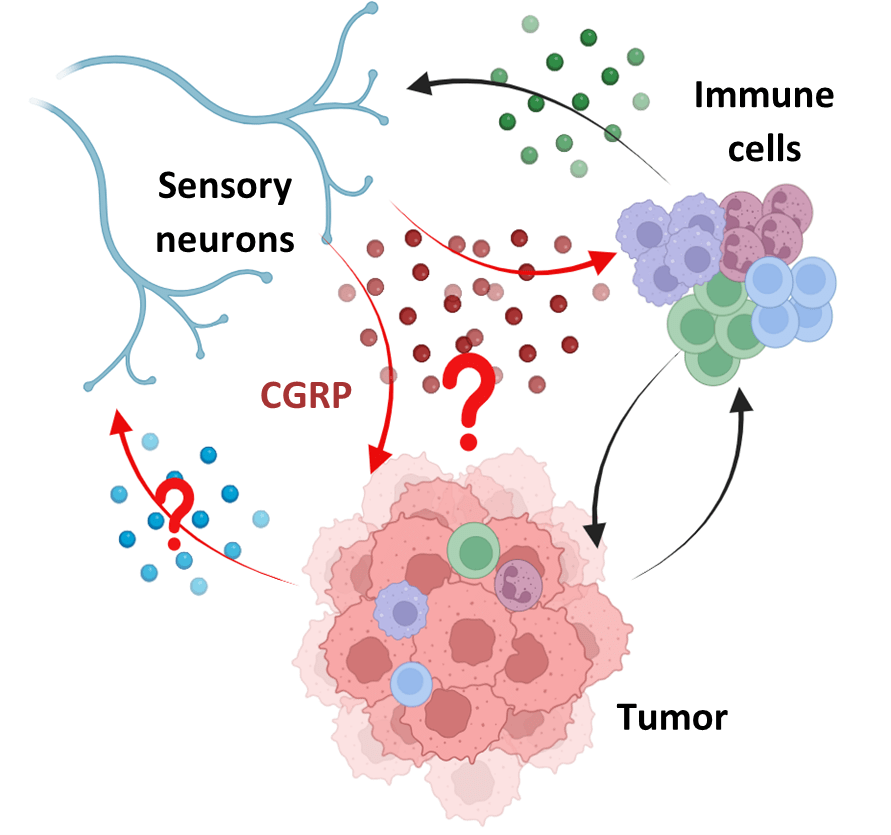
Crosstalk between murine colorectal cancer cells and sensory neurons in an in vitro 3D co-culture model using tumoroids
It is essential to gain a better understanding of the interactions between the various components of the tumor microenvironment (TME) in order to explore new therapeutic applications and improve the management of patients with colorectal cancer (CRC). We are interested in studying the role of sensory neurons and their neurotransmitters, such as CGRP (Calcitonin Gene-Related Peptide), in CRC tumorigenesis and the immune response. The goal of this Master’s 2 student project will be to study the crosstalk between murine colorectal cancer cells and sensory neurons in an in vitro 3D co-culture model using tumoroids. The student will work on identifying the optimal culture conditions to ensure maximum viability and interaction (Objective 1). The student will measure tumoroid size and the number and length of neurites to determine whether cancer cells and sensory neurons influence each other’s growth (Objective 2).
- Jean-Marc Brondello and Marie Morille, IRMB
Reprogramming Senescence in Osteoarthritic Cartilage Organoids Using mRNA Therapy
Osteoarthritis is a chronic disease affecting millions of people, characterized by the progressive degradation of joint cartilage. One of the major causes of this degeneration is the accumulation of senescent cells, which secrete pro-inflammatory factors and impair tissue regeneration. Current therapies are primarily symptomatic and do not target the underlying cellular mechanisms. This project explores an innovative approach to regenerative senotherapy, based on the transient delivery of mRNA encoding an anti-senescence factor, in order to restore the functions of senescent chondrocytes.
- Martine Daujat, IRMB
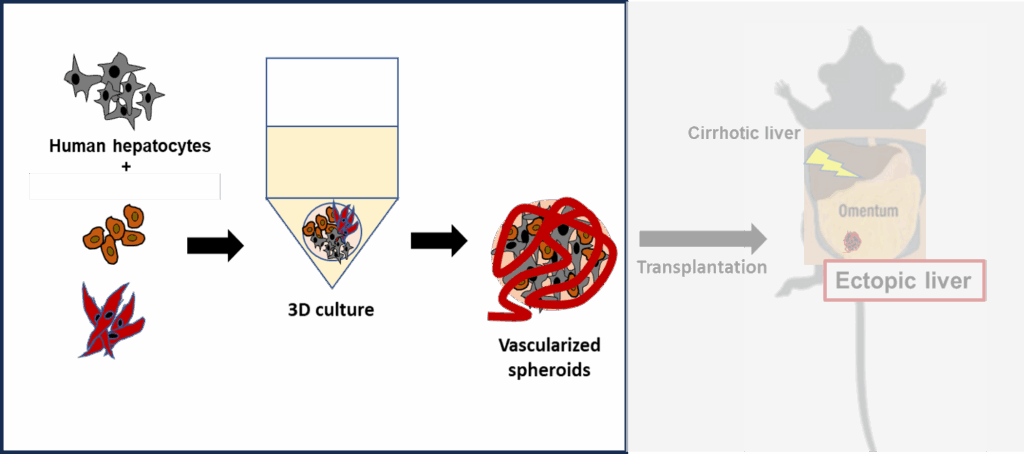
Liver transplantation remains the only effective treatment for advanced liver disease, but the shortage of donors and the clinical condition of patients limit access to it; hepatocyte transplantation offers a less invasive alternative, provided that their survival, function, and engraftment can be improved. The ECTOLIV program aims to develop a device based on vascularized human hepatocyte spheroids capable of surviving in an ectopic site and supporting liver function in a mouse model of cirrhosis. The focus of the Master’s 2 internship will be on the bioengineering of 3D hepatic spheroids to improve their resistance toischemia and optimize their in vitro pre-vascularization in various hydrogels.
- Solange Desagher, IRIM
Optimization and Use of Human Mesencephalic Organoids to Elucidate the Molecular Mechanisms of Influenza Virus-Induced Alpha-Synuclein Aggregation.
Epidemiological studies have established an association between Parkinson’s disease (PD) and infection with the influenza virus (IAV). To establish a causal link, it is necessary to understand the mechanisms by which this virus might cause the disease. Our preliminary results suggest that IAV induces the aggregation of the alpha-synuclein (aSyn) protein, a process crucial to the pathogenesis of PD. Since the neurons that degenerate in PD are the dopaminergic neurons of the substantia nigra, our goal is to establish and optimize the culture of human mesencephalic organoids to best model PD and investigate the mechanisms by which IAV might induce aSyn aggregation.
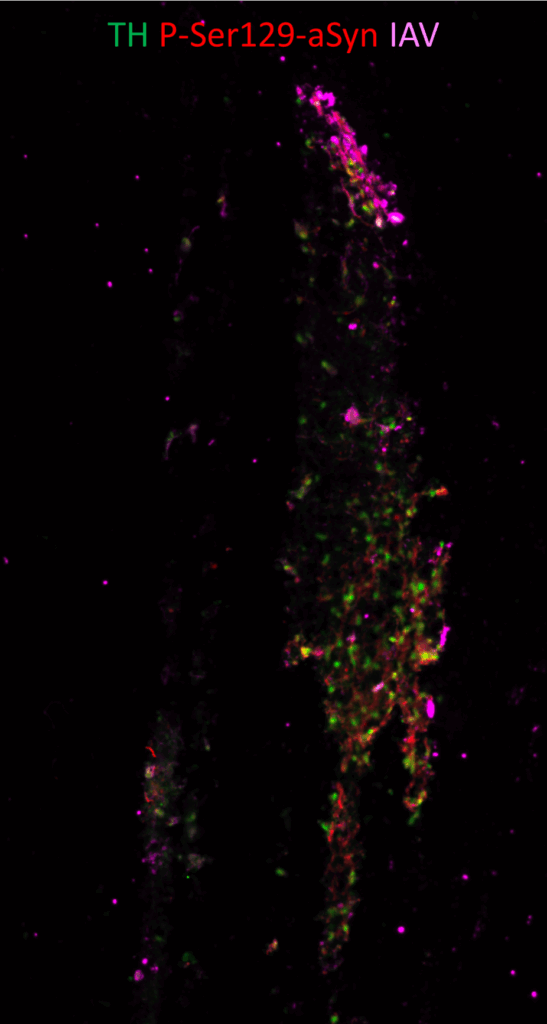
A section of a mesencephalic organoid stained by immunofluorescence with an antibody against IAV, a dopaminergic neuron marker, and an a-syn aggregate marker.
- Mireia Pelegrin, IRMB
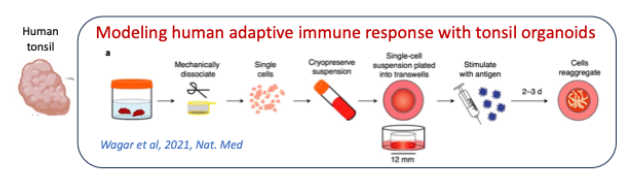
Characterization of lymphoid organoids derived from tonsils for the study of vaccine responses
Lymphoid organoids (LO) thus represent a relevant model for studying immune cell interactions and testing new therapeutic strategies. This project focuses on the phenotypic and functional characterization of LO derived from tonsils and activated by various immunogens, using multiparametric flow cytometry and confocal imaging. These LO can be used to study fundamental questions in immunology as well as to evaluate the efficacy of vaccine approaches and innovative therapies.
research facilities of the Biology and Health Cluster
BCM: BioCampus Montpellier
BC2M: Biocommunication in Cardiometabolic Diseases
CEMIPAI: Center for the Study of Infectious Diseases and Anti-Infective Pharmacology
CBS: Center for Structural Biology
CRBM: Montpellier Center for Cell Biology Research
DEFE: Embryonic Development, Fertility, and Environment
DMEM: Muscle Dynamics and Metabolism
EuroMov DHM: EuroMov Digital Health in Motion
IDESP: Desbrest Institute of Epidemiology and Public Health
IGH: Institute of Human Genetics
IGMM: Montpellier Institute of Molecular Genetics
IGF: Institute of Functional Genomics
IMAGINE: Initial Management and Prevention of Acute Organ Failures in Critically Ill Patients
INM: Montpellier Institute of Neurosciences
INTERTRYP: Host-Vector-Parasite-Environment Interactions in Neglected Tropical Diseases Caused by Trypanosomatids
IRCM: Montpellier Cancer Research Institute
IRIM: Montpellier Institute for Infectious Disease Research
IRMB: Stem Cells, Cellular Plasticity, Tissue Regeneration, and Immunotherapy for Inflammatory Diseases
LBN: Bioengineering and Nanosciences Laboratory
LPHI: Laboratory of Pathogens and Host Immunity
MMDN: Molecular Mechanisms in Neurodegenerative Dementias
PCCEI: Pathogenesis and Control of Chronic and Emerging Infections
PhyMedExp: Physiology and Experimental Medicine of the Heart and Muscles
Sys2Diag: Modeling and Engineering of Complex Biological Systems for Diagnosis
TransVIHMI: Translational Research on HIV and Endemic and Emerging Infectious Diseases
VBIC: Bacterial Virulence and Chronic Infections